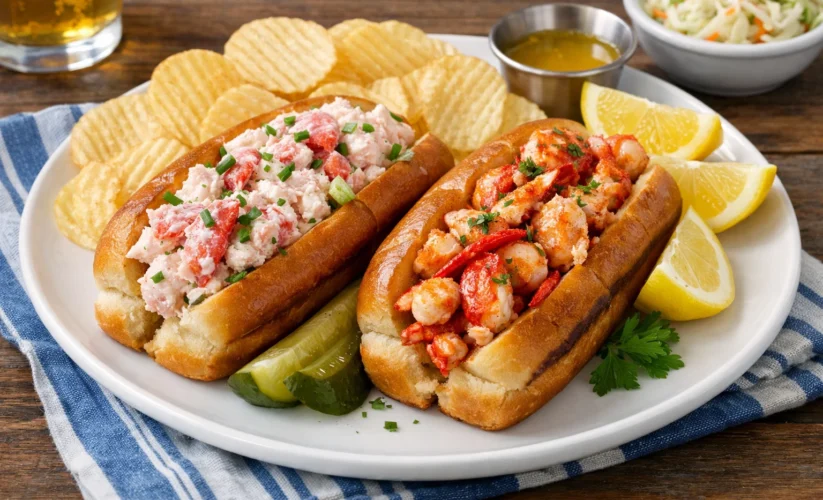
Classic Lobster Rolls Two Ways: Maine-Style Mayo and Connecticut Buttered Lobster Rolls

This recipe explores two iconic lobster roll styles made from the same perfectly cooked lobster meat: the creamy Maine-style roll and the rich, buttery Connecticut-style roll. Both versions start with tender lobster that’s gently boiled, chilled to stop cooking, and carefully removed from the shells to preserve its sweet, delicate texture.
The Maine-style lobster roll features a chilled mayonnaise-based dressing brightened with lemon, herbs, celery, and Old Bay seasoning, while the Connecticut-style keeps things warm and simple with butter, optional celery, roasted garlic, and chives. Served in toasted top-split buns, these lobster rolls highlight the lobster as the star, with just enough seasoning to enhance its natural flavor.
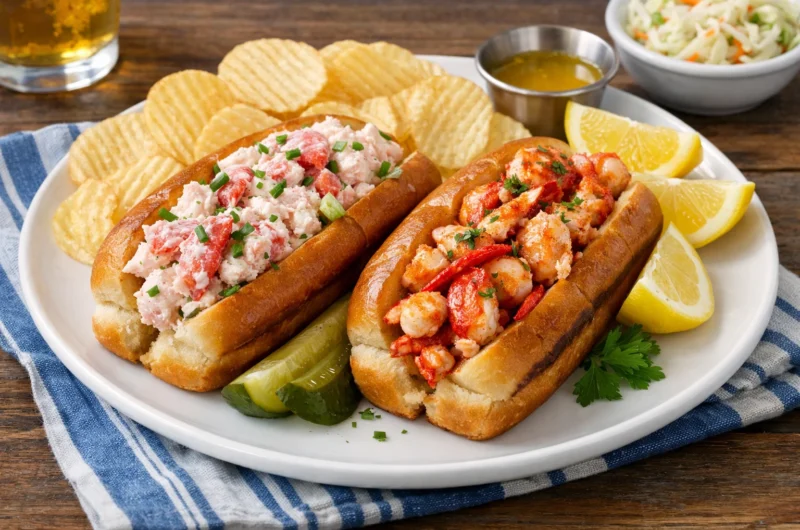
Classic Lobster Rolls Two Ways: Maine-Style Mayo and Connecticut Buttered Lobster Rolls
Course: Lunch, DinnerCuisine: AmericanDifficulty: Medium3
servings30
minutes15
minutes~550–650
kcalIngredients
Live lobsters (about 2 pounds each) or lobster meat / lobster tails
Salt (for boiling water)
Mayonnaise
Lemon zest
Lemon juice (about ½ lemon)
Celery, diced
Fresh dill, chopped
Fresh parsley, chopped
Old Bay seasoning
Sweet pickle juice
Butter
Roasted garlic, minced
Chives, diced
Top-split hot dog buns (brioche or other sweet rolls)
Directions
- Prepare and Cook the Lobsters
Bring a large pot of heavily salted water to a boil. Add the live lobsters and cook for about 8–12 minutes, stirring occasionally. The lobsters are done when the shells turn bright in color and the tails curl. Immediately transfer them to ice-cold water to stop the cooking and prevent the meat from becoming tough. - Break Down the Lobsters
Once cooled, remove the claws, legs, and tails. Set the shells aside if desired, and extract all the meat from the claws, knuckles, and tails using kitchen tools like scissors, a mallet, or a cracker. If using lobster tails only, cut down each side of the shell with scissors to release the meat easily. - Chop the Lobster Meat
Cut all the lobster meat into bite-sized chunks. Check carefully for any shell fragments and divide the meat based on how many lobster rolls you plan to make. - Make the Maine-Style Mayo Dressing
In a bowl, combine mayonnaise with lemon zest and juice from about half a lemon, making sure no seeds get in. Add diced celery, fresh dill, parsley, and Old Bay seasoning. Whisk until smooth. Adjust with more mayonnaise and lemon juice if needed, then add a small splash of sweet pickle juice for brightness. - Combine Lobster with Mayo Dressing
Gently fold the lobster meat into the dressing, tasting and adjusting seasoning as needed. Add more Old Bay if desired. Be careful not to break the lobster pieces. Refrigerate the mixture while preparing the buns and the second style. - Prepare the Connecticut-Style Butter Mixture
Mince the roasted garlic. In a skillet, melt about two tablespoons of butter, then add the garlic and optional diced celery. Cook for a minute or two, then stir in chopped chives and Old Bay seasoning. - Warm Lobster for Connecticut Style
Add lobster meat to the butter mixture and toss gently until evenly coated and warmed through. - Toast the Buns
Heat a skillet over medium heat. Add butter and toast both sides of the top-split hot dog buns until golden. - Assemble the Connecticut Lobster Rolls
Fill each toasted bun with the warm buttered lobster. Finish with an extra drizzle of melted butter and a sprinkle of diced chives. - Assemble the Maine Lobster Rolls
Generously load the toasted buns with the chilled mayo-based lobster mixture. Top with diced chives for color and flavor, then serve immediately.
Recipe Video
Notes
- Avoid overcooking the lobster—chilling it immediately after boiling is key to keeping the meat tender and preventing a rubbery texture.