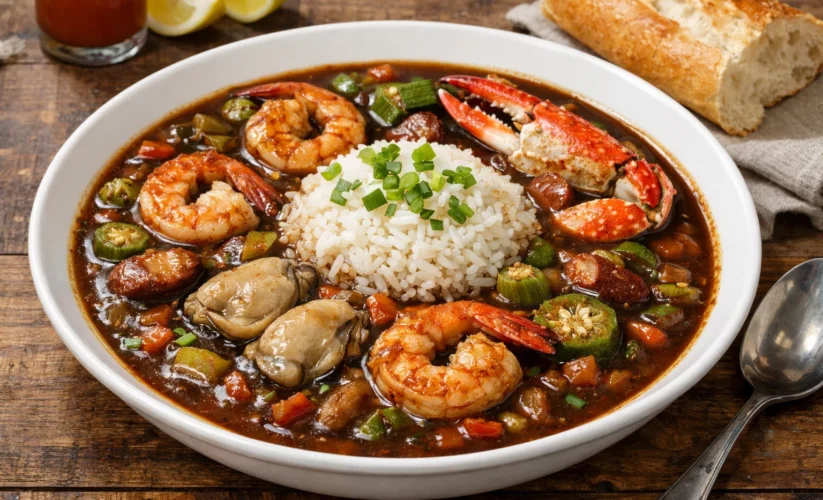
Creole Seafood Gumbo with Dark Roux, Okra, Prawns, Crab, and Oysters

Creole seafood gumbo is a deeply flavorful stew built on layers of patient cooking and bold ingredients. It begins with a rich seafood stock made from prawn heads and shells, drawing out briny sweetness, savory depth, and that signature red-orange hue. From there, a dark roux forms the backbone of the dish, bringing toasted, nutty complexity that defines every spoonful.
The gumbo is further developed with the Louisiana holy trinity of onion, celery, and green bell pepper, followed by garlic, herbs, tomato, and okra. The okra plays an essential role, providing the traditional thickness while the roux delivers roasted flavor. Finally, prawns, crab, and oysters are gently warmed in the broth, creating a luxurious finish that balances richness with fresh ocean salinity.
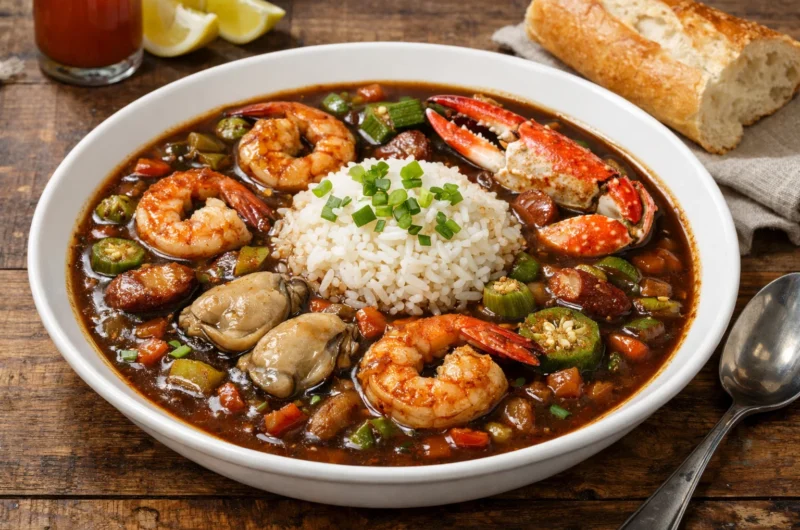
Creole Seafood Gumbo with Dark Roux, Okra, Prawns, Crab, and Oysters
Course: DinnerCuisine: CreoleDifficulty: Medium4
servings25
minutes45
minutes~450
kcalIngredients
Lard or neutral oil
Prawn heads and shells
Onion trimmings or onion
Celery
Garlic, crushed
Water
Flour
Green bell pepper
Dry bay leaves
Dried thyme
Smoked paprika
Cayenne pepper
Chopped or tinned tomato
Okra
Prawns
Dressed crab (including brown meat)
Oysters
Salt
Black pepper
Directions
- Start the seafood stock
Melt lard in a pot, or use a neutral oil. Add the prawn heads and shells and cook them in the fat to release their briny flavor and color, which are fat soluble. Once the aroma becomes distinctly ocean-like, add onion trimmings (or onion), celery, and crushed garlic. Stir well to combine, allowing some surface moisture to evaporate. - Simmer the stock
Pour in water to capture the water-soluble flavors such as umami, sweetness, and salinity. Bring the pot to a boil, then reduce to a simmer. Cook for 30 to 45 minutes to build depth and body. - Begin the roux
While the stock cooks, melt more lard or a high-smoke-point neutral oil in a heavy pan over medium heat. Use slightly more fat than flour to keep the mixture fluid. Add the flour, stirring so the fat coats each granule. Continue stirring steadily. - Cook the roux slowly until dark
Take your time. The roux should cook gradually for at least 20 minutes, moving from raw flour smell to toasty, then nutty brown. Aim for a color between red brick and very dark chocolate. When it reaches brick, turn off the heat and let the residual warmth push it slightly darker without burning. - Add the holy trinity
Immediately stir in chopped onion, celery, and green bell pepper. This cools the pan and stops the roux from darkening further. Cook until the vegetables soften and become translucent, concentrating their flavor. - Build aromatics and spices
Add crushed garlic and cook gently so it doesn’t burn. Stir in dry bay leaves, dried thyme, smoked paprika, and cayenne pepper to layer earthiness, smokiness, and heat. - Add tomato and okra
Mix in chopped or tinned tomato for acidity and umami. Add the okra before the stock so it can cook in the fat, rounding out grassy notes and helping control its texture. - Incorporate the stock
Begin adding the hot seafood stock gradually, stirring at first to prevent lumps and allow any remaining starch to thicken the base. Once smooth, pour in the rest. - Simmer the gumbo
Bring the pot back to a boil, then simmer uncovered for about 30 minutes. This further thickens the gumbo while keeping the okra from overcooking. - Cook the seafood in batches
Add just enough liquid to cover the seafood you plan to serve. Start with the prawns and cook until they are done. Add dressed crab, including some brown meat, simply to warm through. - Finish with oysters and seasoning
Lower the heat. Add oyster liquor first to judge the salt level and to bring briny balance. Adjust with more salt and a generous amount of black pepper. Finally, slip in the oysters and warm them gently.
Recipe Video
Notes
- Cook the oysters only until warmed through—overcooking can make them firm and reduce their natural sweetness.